

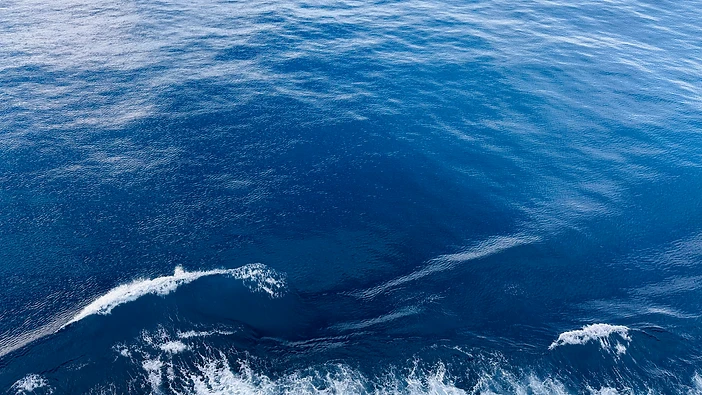
We can't always choose what happens around us, but sometimes we can give ourselves a little space before deciding what comes next.
Have you ever replied to a message and immediately wished you'd waited?
Perhaps someone said something that caught you off guard. A plan changed unexpectedly. Or something relatively small happened at the end of an already demanding day, and your response was stronger than you intended.
I think most of us can recognise moments like these.
Sometimes we react before we've really had the opportunity to understand what we're experiencing.
And sometimes, looking back, we realise there was another way we might have approached things.
Not necessarily a better or more perfect way. Just one that felt more like us.
The space between reacting and responding
There's a difference between reacting to something and taking a moment to consider our response.
A reaction can happen almost instantly. Something happens, we feel something, and before we know it, we've spoken, replied or acted.
A response gives us a little more room.
It doesn't mean suppressing our feelings, staying silent when something matters or always choosing the calmest possible answer.
Sometimes responding thoughtfully means speaking up, setting a boundary or making a difficult decision.
It's simply about having the opportunity to recognise what's happening and consider what we'd like to do.
Of course, that isn't always easy.
When we're tired, under pressure or dealing with several things at once, finding that space can feel particularly difficult.
And that's worth remembering too.
Watching the waves
I've been spending some time watching the sea recently.
It's fascinating how quickly the water can change. One moment the surface seems gentle and settled, and the next a wave gathers strength, breaks and disappears into the movement around it.
Some waves are barely noticeable. Others demand your attention.
Watching them has made me think about how we experience everyday life.
Thoughts, feelings, conversations and unexpected situations can arrive in much the same way. Sometimes gently, sometimes all at once.
We can't always predict what will come towards us, and we certainly can't control everything around us.
But perhaps we don't need to respond to every moment as soon as it arrives.
Sometimes there's value in simply noticing what's happening first.
Not trying to stop it. Not judging ourselves for experiencing it.
Just noticing.
Four questions worth pausing with
When something catches us off guard, we don't necessarily need a complicated process.
Sometimes a few simple questions can help us make sense of our own experience.
1. What actually happened?
It's easy to become caught up in what we think something means.
Perhaps a message sounded abrupt, someone behaved unexpectedly or a situation didn't unfold as we'd hoped.
Before deciding what to do, it can help to consider what we actually know.
What happened? What was said? Is there anything we're assuming?
We may not have all the information, and that's okay.
2. What am I noticing in myself?
This might be a feeling, a thought, a physical sensation or simply a sense that something doesn't sit comfortably.
Perhaps we're frustrated, disappointed, worried or overwhelmed.
Perhaps we're not quite sure what we're experiencing yet.
There's no requirement to find the perfect word or explanation.
It's an opportunity to become a little more aware of ourselves.
3. What matters to me in this moment?
Sometimes the most useful question isn't what we should do, but what matters to us.
It might be honesty, fairness, kindness, protecting our time or being clear about what we need.
Different situations will bring different considerations.
And what matters to one person may not be the same as another.
That's why reflection is personal.
4. What would I like to do next?
Once we've had a little space to consider things, we can think about our next step.
Perhaps it's having a conversation, asking for clarification, taking some time or choosing to leave something alone.
There may not be one obvious answer.
The purpose isn't to guarantee the right decision. It's to give ourselves an opportunity to make a more considered one.
When the pause comes afterwards
Something I've come to appreciate is that reflection doesn't always happen in the moment.
Sometimes we only recognise our reaction once the conversation has ended or the situation has passed.
We might replay what happened and wish we'd handled it differently.
But even then, there's an opportunity to learn something about ourselves.
What was going on for me that day?
What did I find difficult?
What might I want to remember if something similar happens again?
These questions don't have to become another reason to criticise ourselves.
They're simply a way of getting to know ourselves a little better.
And sometimes, that understanding comes gradually.
A practice, not a perfect response
My own interest in reflection continues to grow through everyday experiences, reading, learning and simply paying more attention to what I notice in myself.
I'm increasingly interested in how much we can discover when we make space to consider our experiences rather than rushing to explain or resolve them.
That doesn't mean I've mastered the art of pausing.
Far from it.
There are still moments when I respond quickly, make assumptions or realise afterwards that I could have approached something differently.
But perhaps that's part of personal growth.
Not reaching a point where we always respond perfectly, but becoming more aware of ourselves along the way.
Finding your own way forward
Creating a little space between what happens and how we respond is one of the ideas at the heart of The S.L.O.W. Method™.
It's a simple, non-clinical reflective practice I've developed to encourage self-awareness, clarity and more intentional everyday choices.
It isn't about telling anyone what to think, how to feel or what their next step should be.
It's about making room to explore those things for ourselves.
If you'd like to learn more, you can explore The S.L.O.W. Method™ or visit the Slow Daze Resources page for further reflection.
And as I continue watching the waves, there's one thought I keep coming back to:
We don't have to control every wave that comes towards us. Sometimes we can simply notice it before deciding how to move forward.
Stop. Let. Own. Walk.